Structural Pruning Field Resource
A practical guide for identifying young tree structure issues, selecting pruning priorities, and guiding trees toward stronger long-term architecture.
Structural Pruning Goal
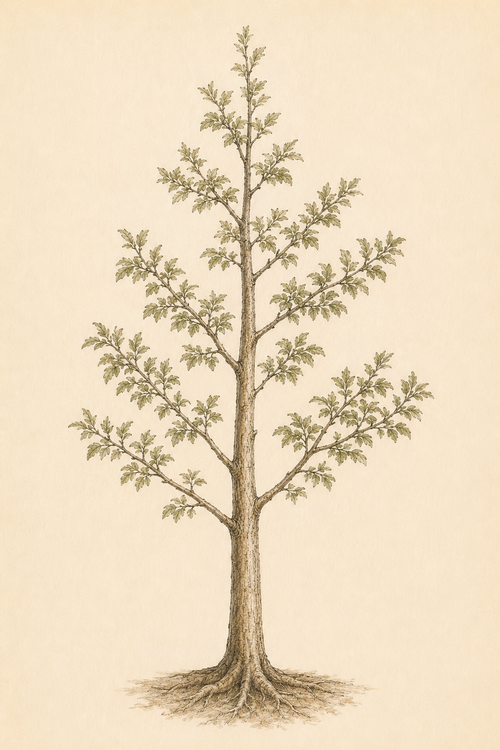
Structural pruning is used to guide tree architecture before defects become large, permanent, or difficult to correct. The main goal is to improve branch arrangement, reduce future weak attachments, manage competing leaders, and preserve natural form.
Inspection Order
1. Leader
Is there a dominant leader, or are stems competing for the same space?
2. Attachments
Look for narrow unions, included bark, cracks, and weak branch attachments.
3. Scaffolds
Assess vertical spacing, radial spacing, branch size, and future clearance needs.
4. Load
Identify overextended limbs, excessive end weight, and branches likely to become defects.
Common Structural Conditions
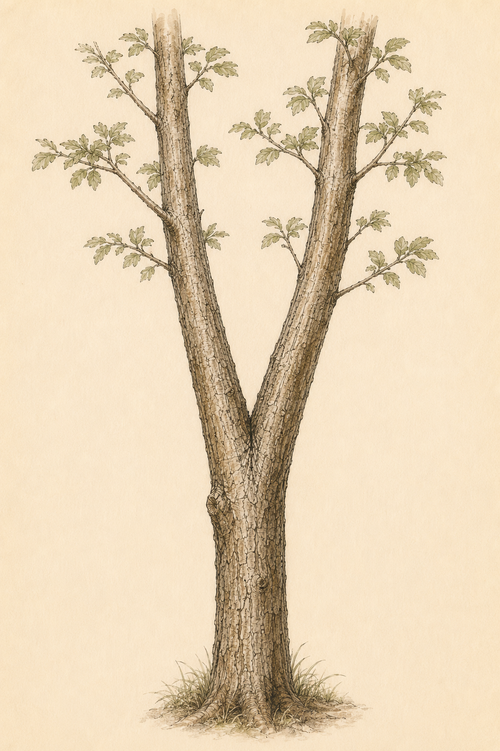
Two or more upright stems compete for dominance and may form weak unions over time.
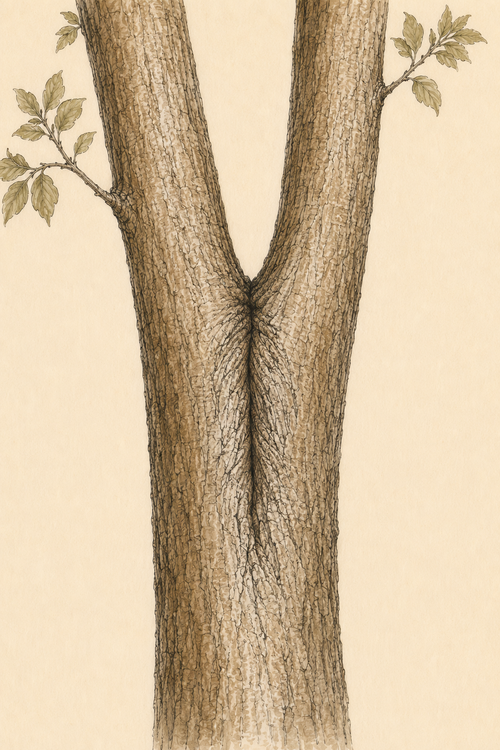
Bark trapped between stems can prevent strong wood attachment and increase splitting potential.
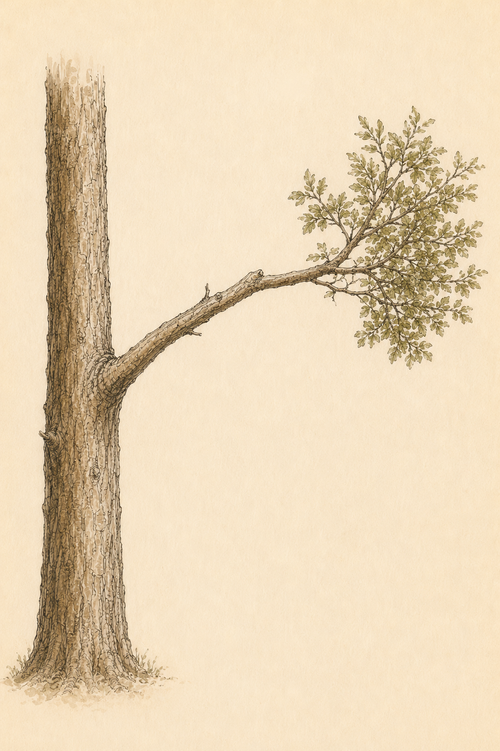
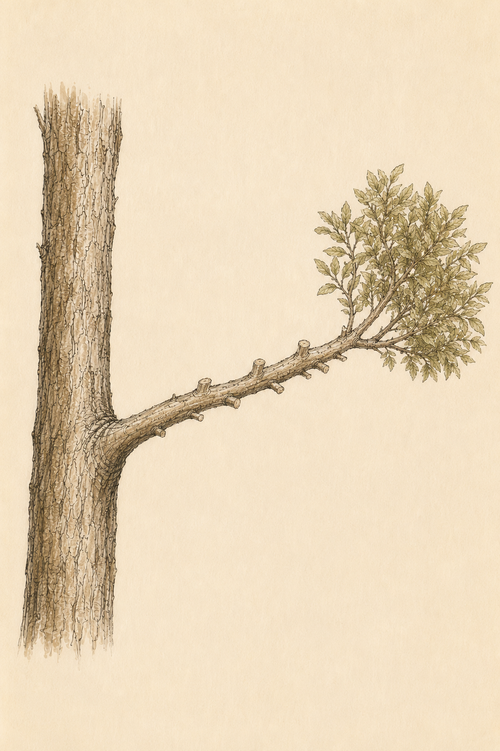
Long limbs with foliage concentrated near the tips can increase lever-arm stress.
Young Tree Priority Order
- Remove dead, broken, damaged, or clearly defective branches.
- Identify and protect the best available leader.
- Subordinate competing leaders rather than removing too much crown at once.
- Select scaffold branches with good spacing and strong attachment.
- Reduce branches with poor orientation, excessive diameter, or heavy end weight.
- Retain temporary branches when they support trunk taper and do not create conflict.
- Plan follow-up pruning instead of overcorrecting in one visit.
Structural Defect Reference
| Condition | Field Indicator | Concern | Preferred Response |
|---|---|---|---|
| Codominant stems | Two or more upright stems competing as leaders. | May develop weak unions, included bark, and future splitting. | Subordinate the weaker or less desirable stem over time. |
| Included bark | Bark compressed between stems or branches. | Can prevent strong wood attachment. | Reduce or remove one competing stem when appropriate. |
| Poor scaffold spacing | Several large limbs clustered at one point. | Creates structural congestion and weak attachment zones. | Select preferred scaffolds and subordinate competing branches. |
| Large lateral limb | Branch diameter is large relative to the parent stem. | May become overextended or poorly attached as it matures. | Reduce or subordinate to slow growth and reduce load. |
| Overextended limb | Long branch with foliage concentrated near the end. | Increases lever-arm stress and branch failure potential. | Use reduction cuts to reduce end weight. |
| Crossing or rubbing branches | Branches contact or damage each other. | Creates wounds and poor crown development. | Remove or subordinate the least desirable branch. |
Structural Pruning Language
| Situation | Better Prescription Language |
|---|---|
| Young tree with competing leaders | Subordinate the less desirable competing leader using reduction cuts. Favor the strongest central leader and reassess for additional structural pruning in the next cycle. |
| Overextended scaffold branch | Reduce end weight on the overextended limb using selective reduction cuts to appropriate laterals. Preserve interior foliage and avoid lion-tailing. |
| Low temporary branches | Retain low temporary branches where they support trunk development unless they interfere with clearance, access, or structure. Reduce if needed rather than removing all at once. |
| Prior topping or poor pruning | Select better-attached sprouts for future structure and reduce or remove poorly attached competing sprouts over multiple cycles. |
Common Structural Pruning Mistakes
- Topping or heading cuts that create weak sprout growth.
- Flush cuts that remove or damage the branch collar.
- Lion-tailing that strips interior branches and leaves weight at the ends.
- Removing too much live crown in a single pruning event.
- Raising the crown too aggressively on young trees.
- Correcting every defect at once instead of planning staged pruning.