Prescription Pruning Field Resource
A practical field guide for turning tree observations into clear pruning objectives, defensible prescriptions, and follow-up recommendations.
Observe, Diagnose, Prescribe
Observe
Identify species, age class, site use, targets, clearance needs, defects, prior pruning, and current crown condition.
Diagnose
Separate structural defects, health concerns, clearance conflicts, storm damage, and pruning response issues.
Prescribe
State the objective, pruning type, crown location, dose limit, constraints, and follow-up interval.
Prescription Formula
Use this structure: objective + pruning type + target area + dose limit + special notes + follow-up.
Cut Selection Reference
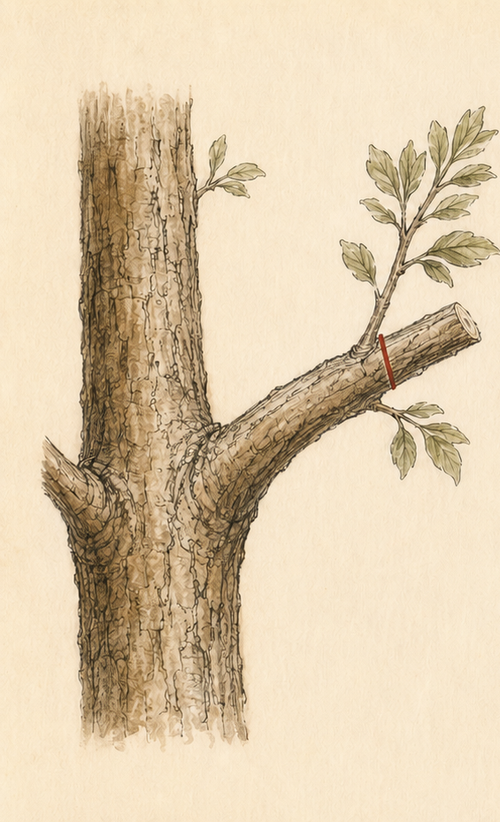
Shortens a limb back to a suitable lateral. Useful for end-weight reduction and subordinating competing stems.
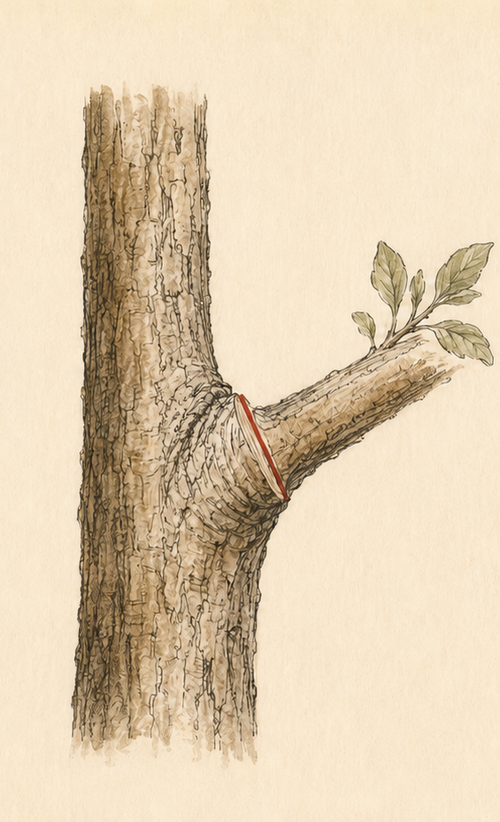
Removes a branch back to the trunk or parent stem while preserving the branch collar.
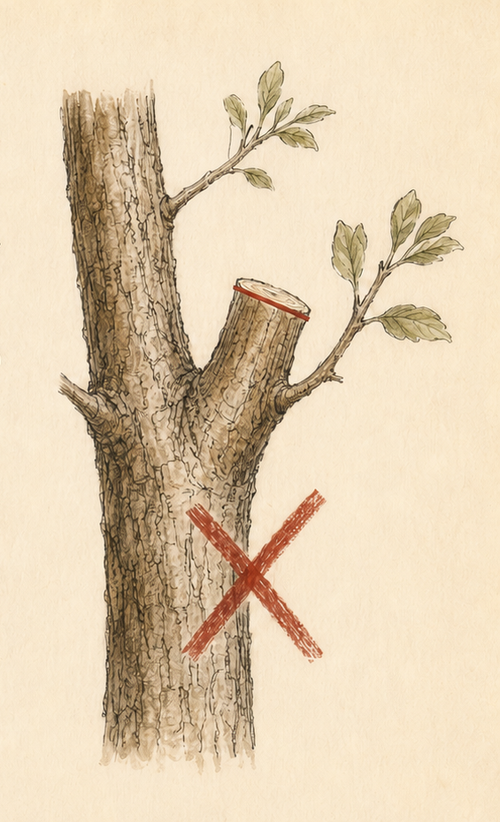
Cuts through a stem without regard for a suitable lateral. Generally avoid except in specific restoration contexts.
Common Pruning Objectives
| Objective | Use When | Prescription Language | Avoid |
|---|---|---|---|
| Structural improvement | Codominant stems, included bark, poor scaffold spacing, weak attachments. | Subordinate competing stems and favor stronger scaffold structure over multiple pruning cycles. | Large unnecessary removal cuts on mature structure. |
| End-weight reduction | Overextended limbs, heavy laterals, long lever arms, branch failure concern. | Use reduction cuts near branch ends to reduce load while retaining natural form. | Lion-tailing or stripping interior laterals. |
| Clearance | Buildings, roads, signs, roofs, service areas, defensible space, access routes. | Prune only as needed for specified clearance while preserving branch collar and crown balance. | Excessive crown raising or flat-siding. |
| Deadwood or damaged branch removal | Dead, broken, hanging, cracked, or storm-damaged limbs. | Remove compromised limbs back to appropriate parent stems or branch collars. | Removing live tissue beyond the stated need. |
| Restoration pruning | Prior topping, heading, lion-tailing, poor pruning response, sprouts. | Select and manage sprout growth to rebuild structure over time. | Trying to correct years of damage in one visit. |
Field Prescription Examples
Case 1: Overextended Lateral Limb
Observation: Long lateral limb with foliage concentrated near the branch end.
Objective: Reduce lever-arm stress and preserve natural crown form.
Prescription: Reduce end weight using selective reduction cuts to appropriate laterals. Avoid lion-tailing and excessive interior thinning. Monitor response at next inspection.
Case 2: Prior Topping Response
Observation: Multiple upright sprouts from old heading cuts.
Objective: Restore stronger crown structure over time.
Prescription: Select better-attached sprouts for future structure. Reduce or remove poorly attached competing sprouts over multiple cycles.
Prescription Quality Control
- Is the pruning objective clearly stated?
- Is the prescription tied to an observed condition?
- Are cuts limited to the minimum needed to meet the objective?
- Are branch collars preserved?
- Are reduction cuts made to appropriate laterals?
- Is live crown removal conservative for the tree’s age, species, and condition?
- Are topping, flush cuts, lion-tailing, and excessive thinning avoided?
- Is follow-up monitoring recommended when response matters?